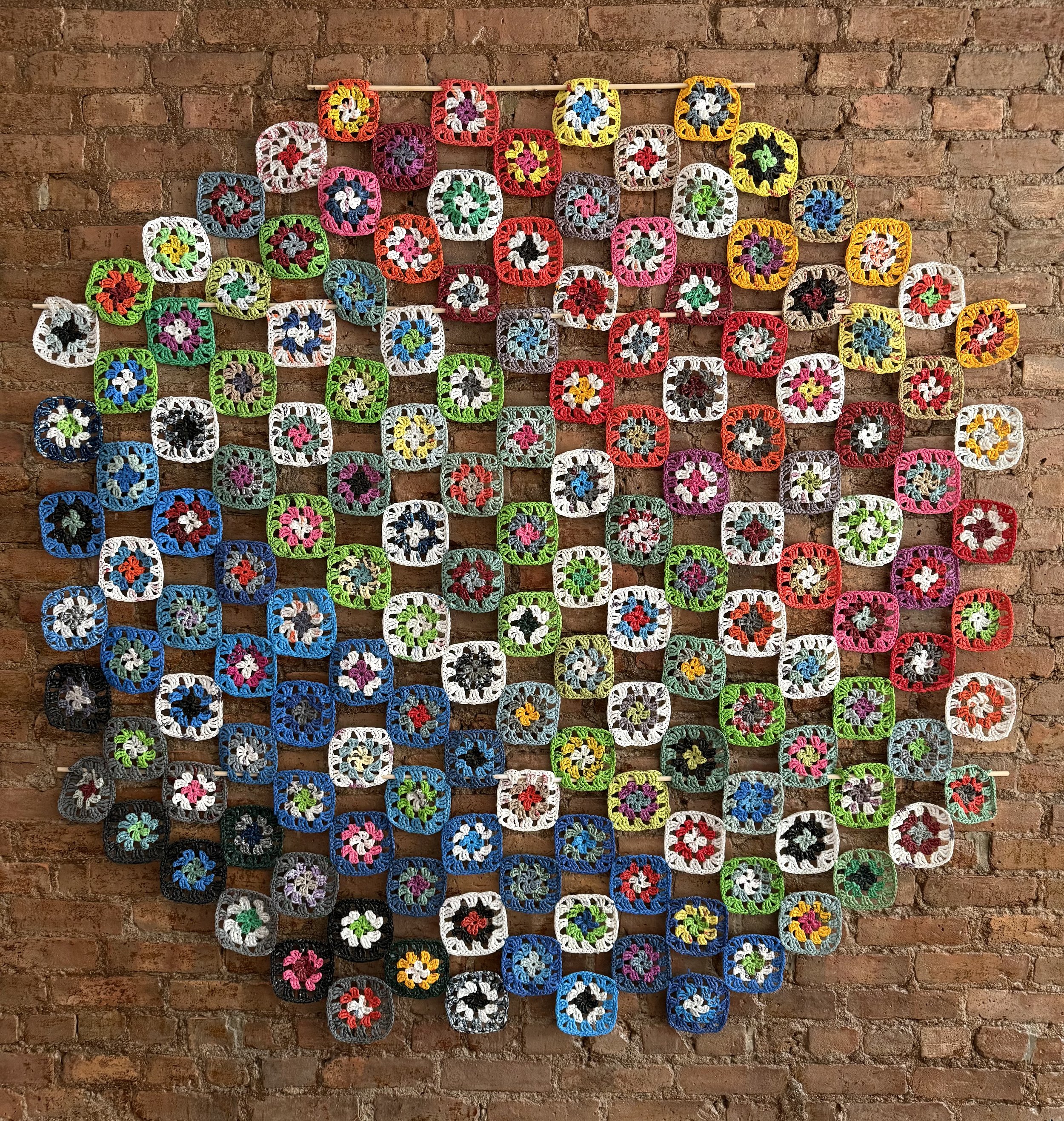
This project marries the past with the present by creating traditional granny squares out of untraditional materials - plastic bags. I learned to crochet from my mother over 30 years ago, who learned the skill from her mother 30 years before that!
Because of their light and aerodynamic qualities, plastic bags often find their way into the environment, disrupting natural ecosystems. Creating art from plastic bags diverts them from the waste stream and lessens their burden on the environment.
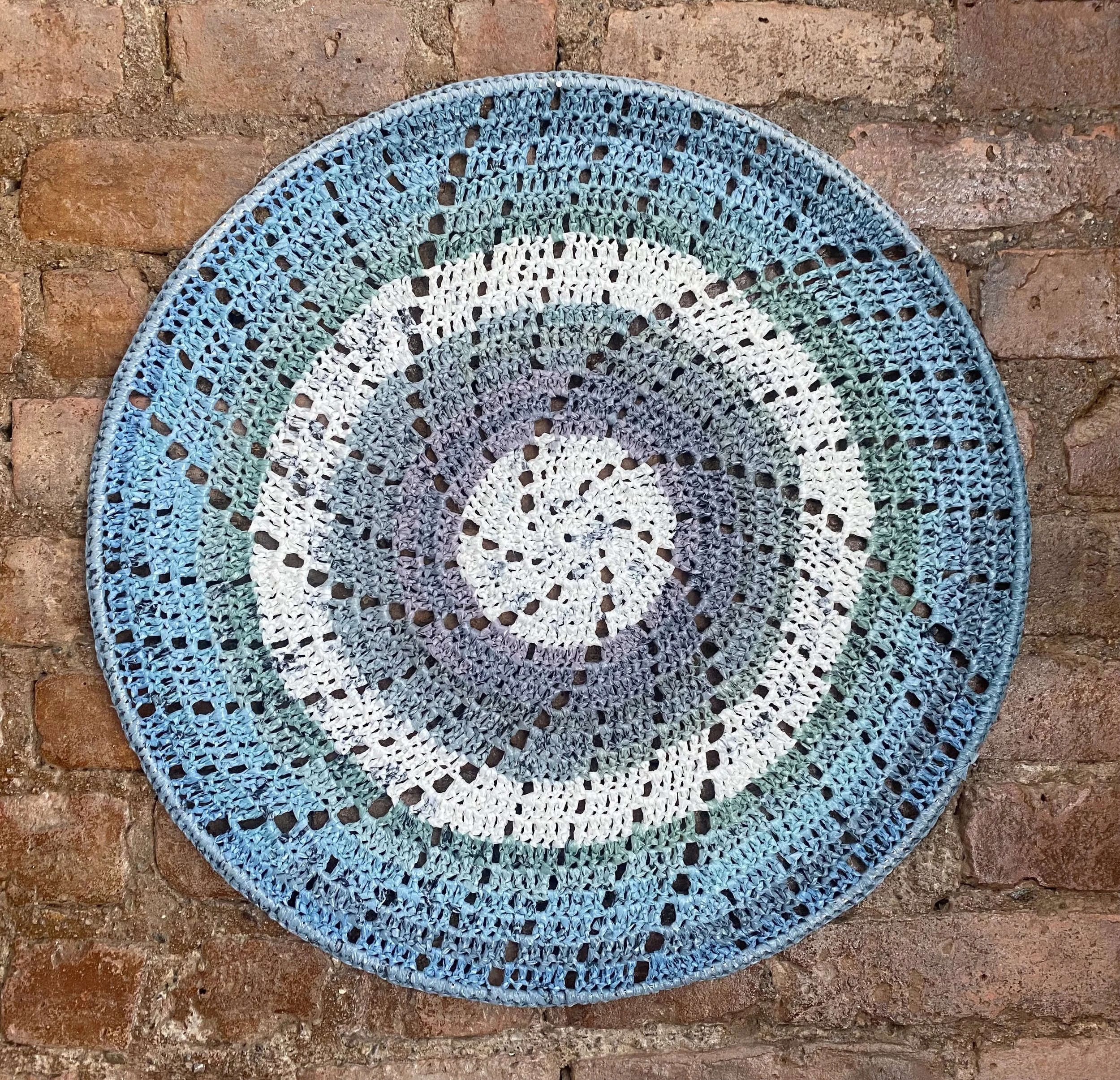
This piece was my first attempt at creating a structured silhouette in contrast to the free-form squares in “Ain’t Your Granny’s Square.” I made this piece on a beach and the soft colors of the bags remind me of the ocean. Plastic bags like these often end up in the ocean where sea animals like turtles confuse them for jellyfish and consume the toxic materials. Ocean plastics also block light that is critical for photosynthesis in phytoplankton to sequester carbon dioxide, therefore, plastics reduce the ocean’s ability to absorb this greenhouse gas.
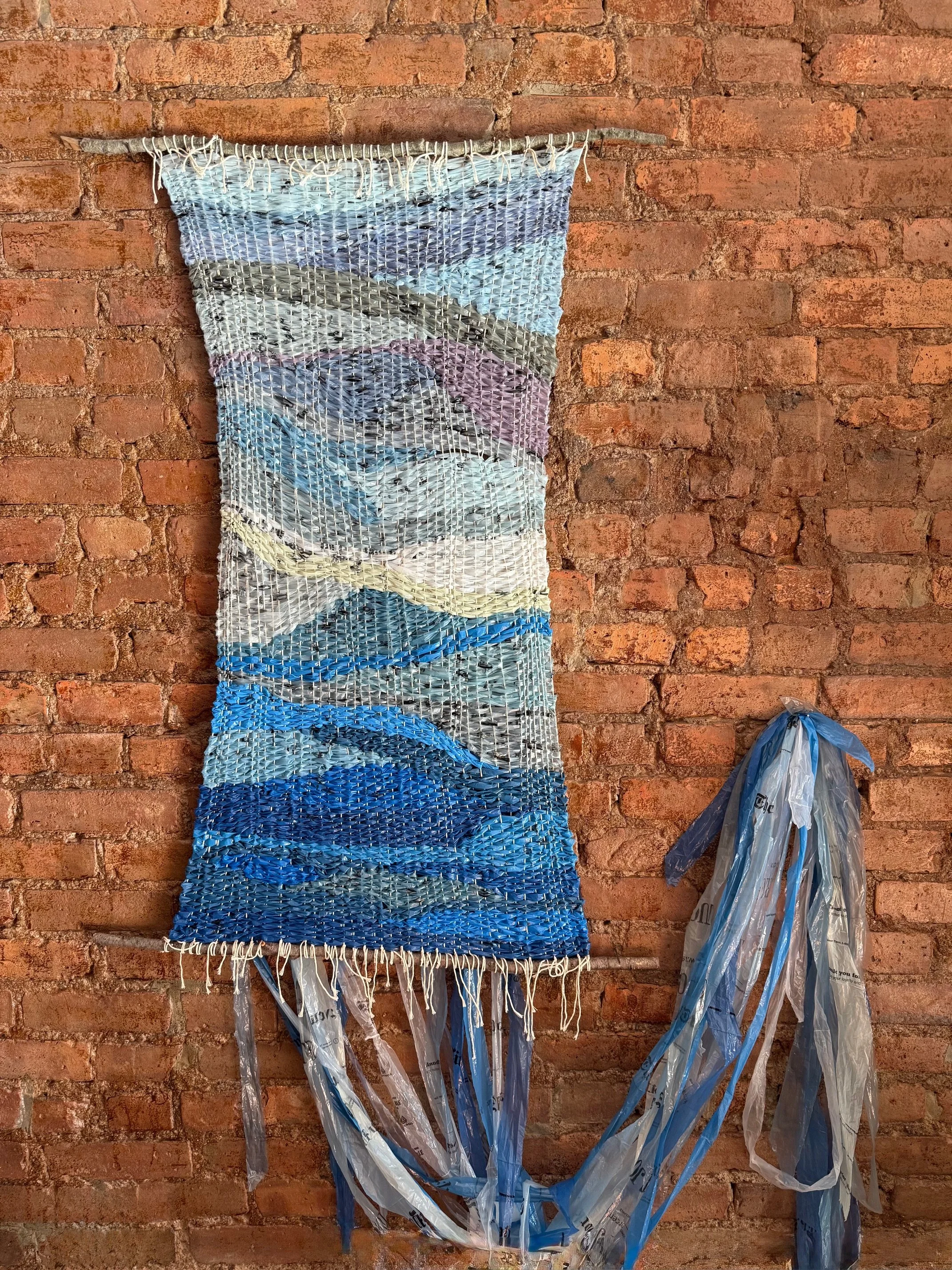
For this piece I wanted to play with traditional weaving techniques using repurposed newspaper bags with natural materials. The risk that I’m taking here is that the sticks might decompose and compromise the structure of the piece, but the plastic will last for anywhere from 20 - 1000 years in its original form before breaking down into microplastics.
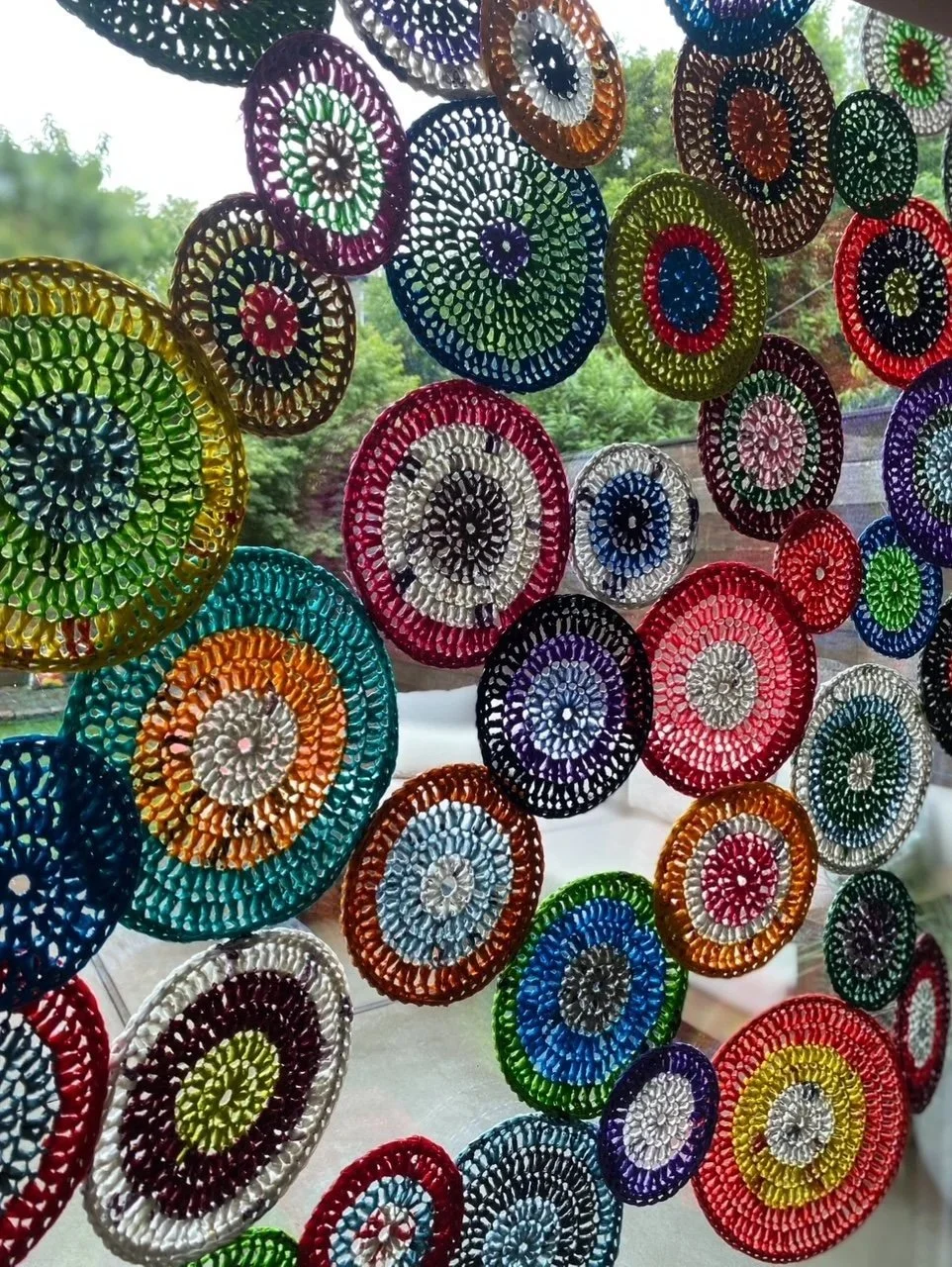
I love the playful and versatile nature of this piece. When it is backlit, as shown here, it becomes luminous as light passes through the colors giving the piece a sense of translucence and levity.
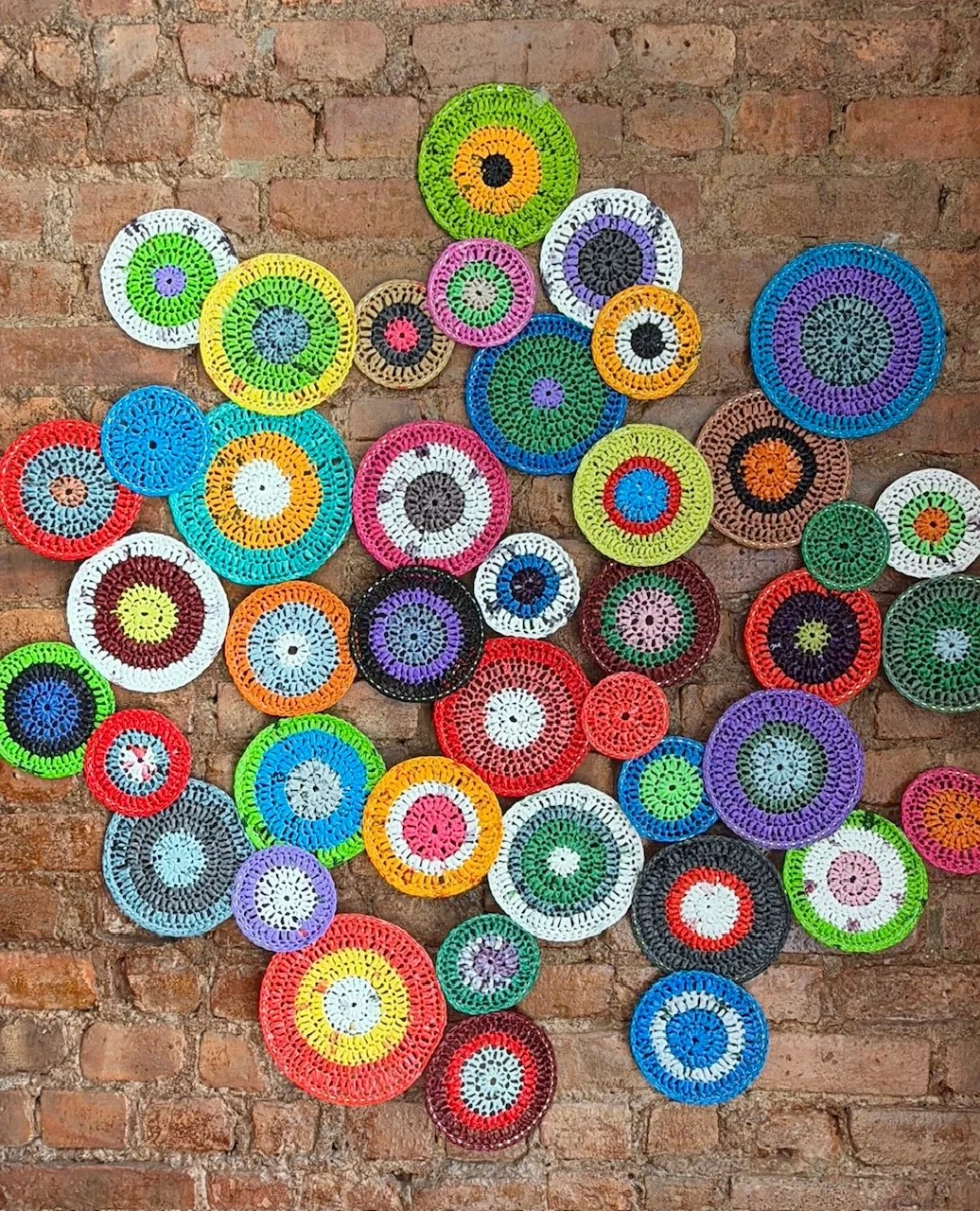
When not backlit, this piece transforms into a display of vibrant solid colors focusing the viewer’s gaze to the physical form that has taken shape rather than the spaces in between and beyond the stitches.
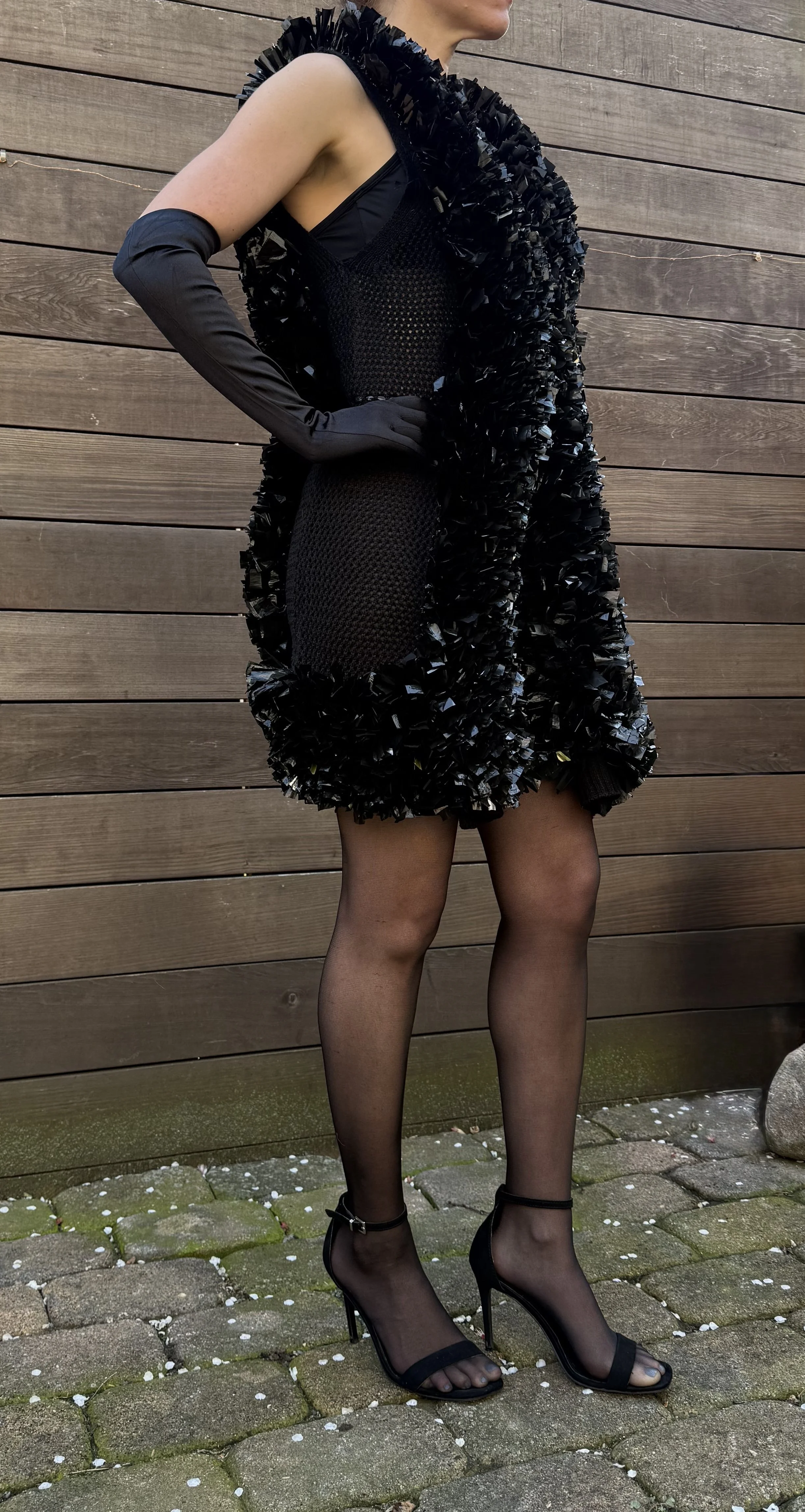
This garment highlights what many clothing items hide in plain sight - plastic. The piece feels and looks luxurious, yet it is made from garbage bags and used grocery bags. The irony lies in the process: while the materials come from disposable waste, the garment itself was created slowly and intentionally over months, with roughly 9,000 pieces of plastic individually hooked into a base vest. This labor-intensive process reflects a conscious move away from fast fashion and calls attention to the dangerous chemicals and synthetic materials embedded in much of our clothing.